RevOps used to be about support. Tool administration. Data cleanup. Reporting. Making sure the trains ran on time.
Those things are still important. But they're table stakes. In 2026, RevOps is about driving revenue. Period.
The best teams are using data, AI, and automation to build a revenue engine that actually delivers predictable, scalable growth.
They're not just supporting the sales team. They're identifying the deals that will close fastest. They're ensuring every touchpoint is personalized and effective. They're optimizing the entire revenue lifecycle, from first touch to renewal.
It's a completely different mindset. And it requires a completely different approach.
Here's the playbook those teams are using:
From Cost Center to Revenue Engine
Most mid-market organizations treat RevOps as a support function. They think of it as the team that manages the CRM, cleans up data, and generates reports.
That's why most RevOps teams are understaffed, underfunded, and undervalued. They're seen as a cost center, not a revenue driver.
But there's a better way. The organizations that are winning in 2026 are treating RevOps as a strategic function that directly drives revenue. They're giving RevOps a seat at the table. They're empowering them to make decisions that impact the entire revenue organization.
This requires a fundamental shift in thinking. It requires viewing RevOps not as a support team but as a strategic engine for growth.
The Three Pillars of RevOps 2.0
Pillar 1: Data-Driven Prioritization
Old RevOps was about activity. How many calls did reps make? How many emails did they send?
New RevOps is about signals. Which accounts are showing the strongest buying intent? Which deals are most likely to close this quarter? Which leads are worth pursuing?
High-performing teams are using AI to analyze every touchpoint, engagement, and interaction to identify the signals that actually predict revenue.
They're not just tracking activity. They're identifying intent.
Then they're prioritizing their efforts accordingly. They're focusing on the deals that are most likely to close. They're engaging the accounts that are showing the strongest buying signals.
They're using data to make smarter decisions about where to focus their time and resources.
Pillar 2: Personalized Engagement
Old RevOps was about mass marketing. Generic emails. One-size-fits-all messaging.
New RevOps is about personalization at scale. Understanding each buyer, their specific needs, and their unique challenges.
High-performing teams are using data and AI to personalize every touchpoint across the customer journey.
They're not just sending generic emails. They're delivering targeted messaging based on buyer behavior and intent. They're creating personalized experiences that resonate with each individual prospect.
They're using AI to understand their buyers and deliver the right message at the right time.
Pillar 3: AI-Powered Visibility
Old RevOps was about static reports. Backward-looking data. A limited view of what happened last week.
New RevOps is about real-time visibility. Understanding what's happening right now and predicting what will happen next.
High-performing teams are using AI to get a 360-degree view of their revenue engine.
They're not just looking at past performance. They're using predictive analytics to forecast future revenue. They're identifying risks and opportunities in real time. They're optimizing their entire revenue system based on actionable insights.
If you are ready to implement and change, you better use our link to the rev ops scorecard to figure out if this sounds like something that you are ready to do.
The Transformation Playbook
Making that transformation is easier than you think to do for your organization
1. Make Revenue the North Star
This may seem easy but often times is hard. You and your RevOps team needs to align to the key priorities and goals and that all the metrics that roll into a specific and primary spot.
They're not supporting sales. They're accountable for revenue.
Make a change that goes down from revenue will help connect and be seen and heard.
2. Invest in Signal Intelligence
Most are trying to hit something but only see the board and use intuition. You are in a spot to be the key source of knowledge, insight and revenue performance. Data enrichment in this case is your friend because as mentioned earlier, it can show the full view and clear picture of what is good and what is. Data integrity is huge if there are team disconnect, as they won't know where the issue is.
When teams start that, then it's easy to say those numbers are wrong because there are a lot of handoffs and a lack of visibility, and then they end up saying it won't solve anything. Well, if you put in this information, you can tell them otherwise.
3. Automate Personalization at Scale
Personalization should be as hard as it sounds, because most of the time the automation with it doesn't work, so let's take a step back:
You need to segment them down and make it as clear as possible for the end user.
If you can't connect the data and automate the process from that data, it becomes a pain to handle all this information. A test often done here can allow the user to see and feel the process themselves and come up with a way to do this.
So what's the next steps:
There are three steps that you can follow for your organization when thinking about the success of all of this:
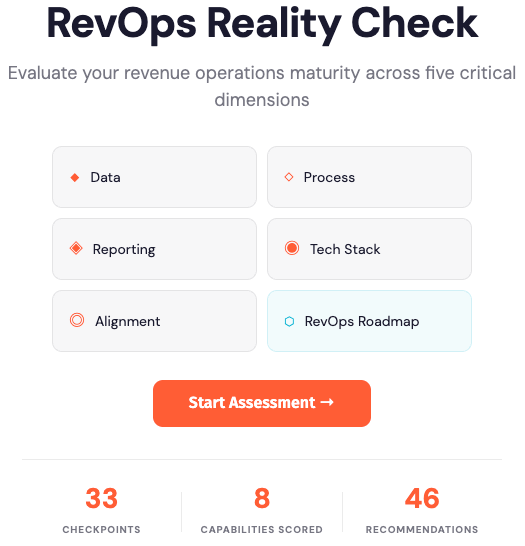
Make sure to use the RevOps reality check: Link
Automate most of the data that connects to Hubspot, or that can be sent to a report
Engage in automation and data-driven growth
All of these steps might look crazy, but if you have not set your team up, contact us by scheduling a talk and see what your team might be missing!
A New Era for RevOps
RevOps isn't just about support anymore. It's about revenue. About driving growth. About building a predictable, scalable, and data-driven revenue engine.
The organizations that understand this are the ones winning. The organizations that are stuck in the old model are getting left behind.
Which RevOps future will you create?